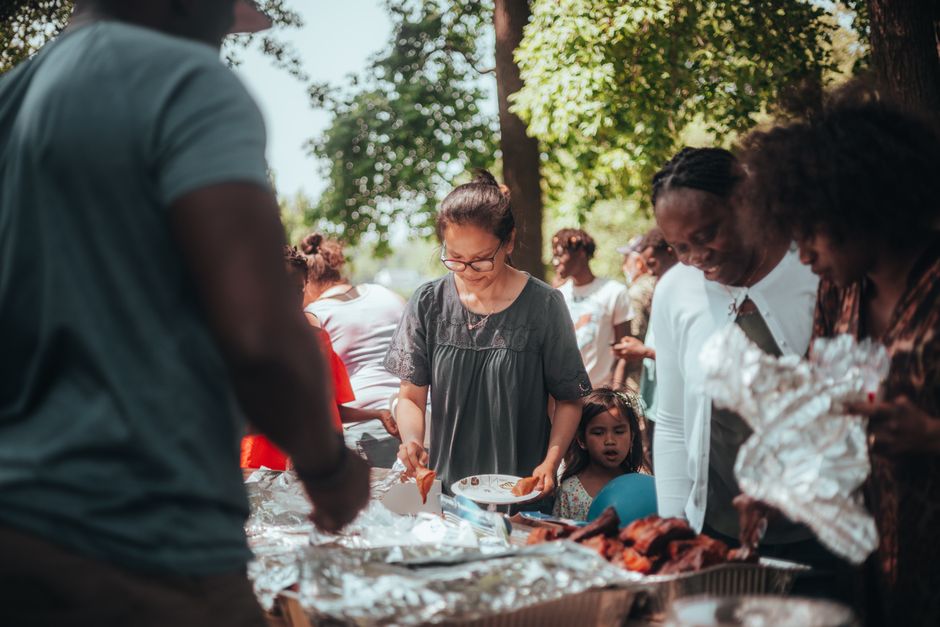
You moved 7,000 miles. You figured out a new currency, a new healthcare system, new traffic laws. You got your kids enrolled in school. And now you’re sitting in someone’s living room on a Saturday evening, eating jollof rice or pupusas or dumplings, and someone says: “We should make this official.”
That sentence changes everything. It’s how a potluck becomes a cultural association. How a WhatsApp group becomes an organization with bylaws, a bank account, and 80 families counting on it.
The U.S. Census Bureau counted 47.8 million foreign-born residents in 2023, according to the American Community Survey. Nearly one in five new businesses started in 2023 was founded by an immigrant, per a Gusto survey of 1,300 entrepreneurs. Immigrants don’t just join communities. They build them.
But building a formal organization in a country where you didn’t grow up? Where the legal paperwork is in English, the tax system has its own acronyms, and you don’t have three generations of local connections to lean on? That’s a different kind of challenge.
This guide covers the practical steps and the not-so-obvious obstacles. Not the philosophy of diaspora identity (we’ve got a separate guide on running a diaspora community organization for that). This is about the process of going from zero to registered, funded, and functioning.
The Paperwork Nobody Prepared You For
Starting a community organization in the U.S. means dealing with two layers of bureaucracy: state incorporation and federal tax-exempt status. Neither is impossible. Both are confusing if English isn’t your first language and you’ve never interacted with the IRS before.
Here’s the sequence, stripped down.
Step one: Get an EIN. An Employer Identification Number is your organization’s tax ID. It’s free. If you have a Social Security Number, you can get one online in about ten minutes through the IRS website. If you don’t have an SSN, you can use an ITIN (Individual Taxpayer Identification Number) or submit IRS Form SS-4 by fax or mail. The online application doesn’t work without an SSN or ITIN, which catches a lot of immigrant founders off guard.
Step two: Incorporate in your state. File articles of incorporation with your state’s Secretary of State office. Filing fees range from $8 (Kentucky) to about $170 (Maryland), with most states landing between $20 and $100. Your articles need specific language about your organization’s purpose and what happens to the assets if you dissolve. Get this right the first time because the IRS will check it later.
Step three: Apply for 501(c)(3) status. If your organization runs cultural programs, language schools, or community services open to the public, this is likely your path. The streamlined Form 1023-EZ costs $275 and works for groups expecting under $50,000 in annual revenue and under $250,000 in assets. The full Form 1023 costs $600 and takes three to six months to process. You’ve got 27 months from your incorporation date to file and still get retroactive recognition.
One thing that trips up immigrant founders: you don’t need a credit history, a permanent address, or citizenship to do any of this. The IRS doesn’t care about your immigration status when issuing an EIN or granting tax-exempt status. It cares about your organizational purpose.
For a deeper dive into governance documents, our guide on how to write bylaws walks through the process step by step.
When English Is Your Second (or Third) Language
About 46% of immigrants aged five and older in the U.S. have limited English proficiency, according to the Migration Policy Institute. That statistic shows up in every interaction with a government form, a bank teller, or a venue manager who needs a signed contract.
The bureaucratic English used in nonprofit formation isn’t everyday English. “Articles of incorporation,” “dissolution clause,” “registered agent,” “fiscal year.” You might speak perfectly fluent conversational English and still hit a wall when the IRS instructions read like they were written by lawyers for other lawyers. Because they were.
What works: find someone in your community who’s done this before. Not a paid consultant (unless you can afford one). A friend, a colleague, a member of another immigrant organization who filed their 1023 two years ago and can walk you through the confusing parts. Many cities also have free legal clinics for nonprofits. The Foundation Center (now Candid) maintains a directory, and local bar associations often run pro bono programs specifically for small nonprofits.
Don’t let the language barrier stop you from opening a proper bank account for the organization. Walking into a bank with your EIN letter, your articles of incorporation, and your bylaws is enough to open a business account. The bank doesn’t need to see your personal immigration documents to open an account for a registered nonprofit.
Building Trust When You’re Starting from Nothing
In your home country, you might have had decades of family reputation, professional networks, and community standing. Here, you’re starting over. People who barely know you are supposed to hand you their family’s $150 annual dues and trust that the money goes where you say it will.
This is the trust gap, and it’s the biggest invisible obstacle immigrant founders face.
Two things close it faster than anything else.
First, radical financial transparency. Don’t just present a budget at the annual meeting. Share a simple income-and-expense summary at every gathering. Every single one. When the Haitian community association in Boston shows where every dollar of the $12,000 Carnival fund went, members stop wondering and start trusting. Not because the leaders are inherently trustworthy (they might be), but because the numbers are visible.
Second, shared decision-making from day one. The fastest way to kill trust in a new organization is for one person or one family to make all the decisions. Form a founding committee of five to seven people from different families. Vote on things publicly. Write it down. Let people see how the sausage gets made.
Somiti tracks dues payments and shows your members who’s paid and who hasn’t, which removes one of the most common sources of suspicion in new organizations: “Where’s the money going?” When every payment is recorded and every member can see their own status, the treasurer doesn’t have to defend the books at every meeting.
Your First Members Won’t Look Like You Think
Here’s something experienced immigrant organizers know but first-time founders don’t expect: your first 30 members will come from at least three different segments of your community, and they’ll want different things.
The recently arrived families want practical help. Where’s a good pediatrician? How do school enrollment forms work? Which grocery store carries the right spices? They’re joining for the network as much as the culture.
The established families (ten-plus years in the U.S.) want cultural preservation. Language classes for their kids. Holiday celebrations. A community they can belong to that feels like home.
The American-born generation wants connection to their heritage on their own terms. They don’t want to sit through a four-hour meeting conducted entirely in a language they only half understand. But they do want to learn their grandmother’s recipes and understand the traditions they grew up watching.
Serving all three groups isn’t optional. It’s how you survive. A detailed look at this generational dynamic is in our guide to running a diaspora community organization, but the short version: plan programming for each group separately, and create a few big events each year that bring everyone together.
Money Mechanics That Cross Borders
Immigrant community organizations handle money differently than a typical American club. You’re probably dealing with at least two of these:
Members who prefer cash. Not because they don’t have bank accounts, but because that’s how they’ve always done it. A Korean church elder who puts an envelope in the offering box every Sunday isn’t going to switch to online payments because you sent a link.
Remittance-style pooling. In many immigrant communities, collective saving is already a tradition. Tandas in Mexican communities. Susus in West African and Caribbean communities. Hui in Chinese communities. Equb in Ethiopian and Eritrean communities. These rotating savings circles have existed for centuries. Your organization’s dues collection is a different thing, but members will mentally compare the two. Make sure your financial structure is at least as trustworthy as the informal systems they already know.
Event-based fundraising that funds everything. A single annual gala or cultural festival might generate 60% of your organization’s revenue. That’s a fragile model. If the venue falls through or attendance dips, your whole budget collapses. Consistent dues collection creates a financial baseline so the big event is a bonus, not a lifeline. For groups weighing their options, our CheddarUp vs Somiti comparison covers what different tools handle well.
Picking the Right Legal Structure (It’s Simpler Than It Looks)
Many immigrant founders overthink this step because nonprofit law feels foreign. Literally.
If your group teaches language classes, runs cultural programs open to the public, or provides community services, you want a 501(c)(3). Full stop.
If you’re purely a social club where 20 families eat together once a month, a 501(c)(7) might work. But most immigrant community organizations outgrow this fast because the programming naturally expands beyond members-only socializing.
Don’t skip incorporation because it feels complicated. An unincorporated group means one person is personally liable for everything. If someone trips at your cultural event and decides to sue, the lawsuit lands on whoever signed the venue contract. Incorporation creates a legal shield between the organization and the individuals running it.
Incorporation usually means adopting bylaws too. Our free bylaws generator drafts a starter set tailored to your group’s structure, so that piece doesn’t become the thing that stalls your filing.
And don’t wait too long to file for tax-exempt status. Every year you delay is a year your members’ contributions aren’t tax-deductible. For a community where families are already stretching their budgets, that tax deduction matters.
The Name Question
This sounds trivial. It’s not.
Do you name the organization in your heritage language, in English, or both? A name in your heritage language signals authenticity and cultural pride. A name in English makes it easier for venues, banks, grant-makers, and local officials to find you and take you seriously.
Many successful organizations use both. “Pratham Houston” (a Hindi word meaning “first”). “Asociacion Guatemalteca Americana.” “Philippine American Cultural Foundation.” The heritage language connects. The English component communicates.
Whatever you choose, check your state’s business name database before filing. Two organizations can’t share a name in the same state, and generic cultural names (“Indian Cultural Association”) might already be taken in yours.
Programming That Builds a Real Community
Your first event should be low-cost and high-warmth. A potluck, a picnic, a cultural celebration in someone’s backyard. Don’t rent a ballroom for your first gathering. You don’t know yet if 20 people will show up or 200.
After the first few informal events, you’ll see patterns. The families who keep coming back. The people who volunteer without being asked. The kids who light up during the cultural performances. These patterns tell you what your community actually wants, which might be different from what you assumed.
For starting and running a cultural association, the programming that sustains organizations long-term tends to be a mix of big annual events (the heritage holiday celebration, the summer festival) and smaller monthly gatherings (potlucks, movie screenings, language classes, professional networking nights). The big events attract new families. The small events keep them.
Heritage language schools deserve special mention. If your community has enough families with young children, a weekend language school might be the single most valuable thing you create. Chinese heritage schools in the U.S. now enroll roughly 200,000 students across two national networks. Korean weekend schools number about 1,000 through the National Association for Korean Schools. These programs are community-run, volunteer-taught, and always on the verge of financial crisis. But they keep languages alive in a country that doesn’t teach them.
Getting Help Without Getting Scammed
New immigrant organizations attract two kinds of outside attention: people who genuinely want to help and people who see an opportunity.
Free resources worth knowing about: your state’s Secretary of State website has incorporation forms and instructions. The IRS website has every form you need for tax-exempt status. SCORE (a national nonprofit) offers free mentoring for new organizations. Your local library probably has a community room you can book for free for your first meetings.
Paid services to be cautious about: companies that charge $500 to $2,000 to “file your nonprofit paperwork” are often just filling out the same forms you could complete yourself. The actual government filing fees are $275 for Form 1023-EZ and $600 for the full Form 1023. If someone’s charging you $1,500 on top of that, ask exactly what you’re paying for.
One legitimate expense: if your organization gets complicated (multiple programs, large budgets, real estate), a nonprofit attorney is worth the money. Many offer flat-rate packages for startup nonprofits. But for a cultural association with 50 to 200 families, you can do the initial setup yourself.
The First Year Survival Checklist
Your first twelve months will be chaotic. Here’s what matters most.
Get the legal basics done in the first 90 days. EIN, state incorporation, bank account. Don’t let anyone collect dues into a personal Venmo or Zelle account. That creates tax problems and erodes trust.
Hold at least one event per quarter. Consistency matters more than scale. Four modest potlucks beat one spectacular gala followed by six months of silence.
Collect dues from day one, even if the amount is small. The habit of members paying and the organization tracking those payments is more important than the dollar amount. Fifty families paying $50 each is $2,500. That’s enough to cover a venue rental, basic insurance, and your state’s annual filing fee.
Document everything in a shared location that doesn’t live on one person’s phone. Meeting notes, financial records, member contact information, vendor contacts. When (not if) a board member steps down, the next person needs to pick up without starting over.
Find your community’s alumni association or established cultural group and ask for advice. They’ve already made the mistakes you’re about to make. Most are happy to share what they learned.
You’re Not Starting Alone
Forty-seven million foreign-born residents live in the U.S. Millions of them have gone through exactly what you’re about to go through. The Somali community center in Minneapolis. The Vietnamese mutual aid society in Houston. The Bangladeshi association in Queens. The Salvadoran cultural foundation in Los Angeles. Each one started with a handful of people in a living room who decided their community deserved something more organized.
The legal forms are in English. The tax system has weird acronyms. The bank wants documents you’ve never heard of. None of that is a reason to stop.
Your community already exists. You’re just giving it a structure.