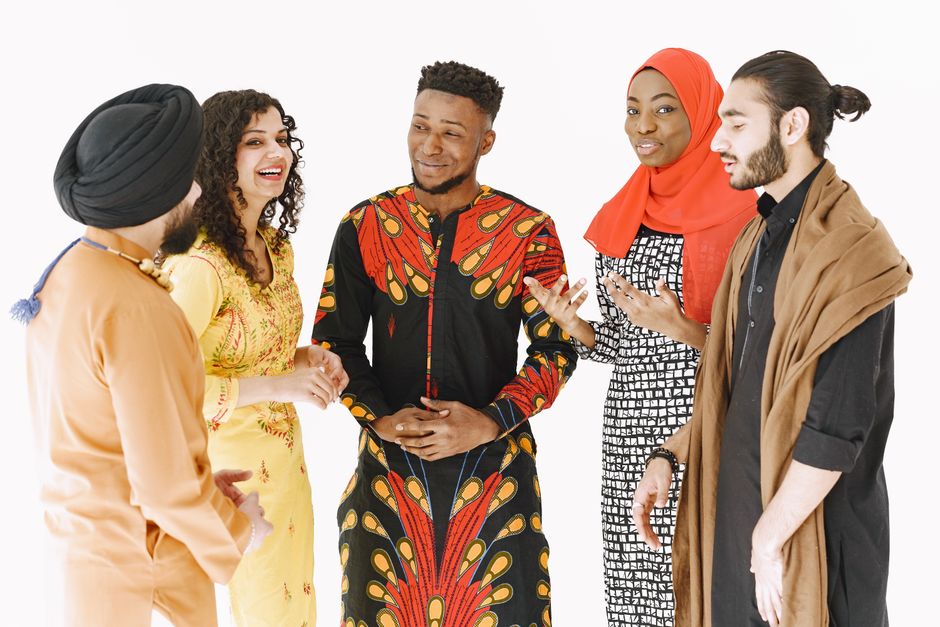
The WhatsApp group started with 14 families sharing recipes and holiday photos. Within six months, it had 90 members, a treasury of $3,400 collected through Zelle, a Navratri celebration that needed a venue, and zero bylaws. The person who started the group chat was now, apparently, the president.
Sound familiar?
A handful of families from the same country or region find each other in a new city. Someone organizes a dinner. Someone else volunteers to collect money for Eid, or Lunar New Year, or Carnival. Before anyone files a single form, there’s an organization. Informal, sprawling, and carrying responsibilities that no one explicitly signed up for.
The U.S. Census Bureau counted 46.2 million foreign-born residents in 2022. By January 2025, that number hit 53.3 million, a record 15.8% of the total population. Mexico, India, China, the Philippines, and Cuba account for the five largest immigrant groups. The Migration Policy Institute has profiled 15 major diaspora communities, from Bangladeshi to Vietnamese, and tracks 35 of the largest diaspora groups overall, each with hundreds of local associations scattered across the country.
Most of these groups don’t have paid staff. They don’t have national headquarters. They run on volunteer energy, family dues, and a deep belief that their culture won’t survive in the U.S. unless someone actively preserves it.
If you’re running one of these organizations (or about to start one), this guide covers the specific challenges diaspora groups face and what actually works.
You’re Not Just Running a Club
A neighborhood book club picks a novel and meets once a month. Your organization? It’s the reason 45 kids in your city learn Bengali on Saturday mornings. It’s the only Haitian Creole-speaking support network for new arrivals within a 60-mile radius. It’s the annual Diwali celebration that draws 400 people and costs $18,000 to produce.
Diaspora organizations carry weight that other volunteer groups don’t. They preserve language, teach cultural practices, build support networks for immigrants who’ve just landed, and create the only intergenerational spaces where grandparents and grandchildren share a room and a purpose. The Hispanic Federation, founded in 1990, now supports a network of over 780 Latino nonprofits across 43 states and territories. GOPIO (Global Organization of People of Indian Origin), founded in New York in 1989, operates over 100 chapters in 36 countries. The National Association for Korean Schools coordinates roughly 1,000 weekend language schools across all 50 states.
These umbrella organizations are impressive. But most diaspora groups operate independently. No national charter. No template. Just a board of volunteers trying to keep things together.
For a broader look at how different community organizations work, from PTAs to civic clubs to cultural associations, our guide by organization type covers the full picture.
The Three-Generation Problem
Every diaspora organization hits it eventually. It’s the defining challenge.
The founders, typically first-generation immigrants who arrived in the 1970s through 1990s, built these organizations from nothing. They pooled money, rented halls, taught language classes, and created community where none existed. Many are now in their 60s and 70s. They’ve run the show for decades, and they’ve earned that authority.
Their children, second-generation Americans in their 30s and 40s, grew up attending these events. They care about the community. But they don’t want to run it the same way. Research on generational acculturation consistently finds that second-generation members often don’t speak the heritage language fluently, have different expectations around decision-making and hierarchy, and define “cultural preservation” differently than their parents do.
Then there’s the third generation. The grandchildren. They’ve grown up American in nearly every way, yet many experience what historian Marcus Hansen described in his 1938 essay as “the principle of third-generation interest”: what the children wish to forget, the grandchildren wish to remember. They want connection to their heritage, but on their own terms.
What does this look like in practice? The founding generation insists the annual Pongal celebration must follow the same format it’s had for 25 years. The second generation wants to add a panel discussion about Tamil identity in America. The third generation would rather have an Instagram-worthy cultural pop-up. Nobody’s wrong. But without a deliberate bridge between these groups, the first generation feels disrespected and the younger generations feel shut out.
The organizations that survive this transition do a few things differently. They create “next generation” committees with actual authority, not advisory roles that get ignored. They run dual-track programming: the traditional celebration and the new format, side by side. They let younger members design and lead their own events, even when the format is unfamiliar to the founders. Expansion, not replacement.
Understanding why members disengage at renewal time can also help you spot generational drop-off before it becomes permanent.
Bilingual (or Trilingual) Communication Without Losing Half Your Members
Your membership probably spans at least two languages and three communication preferences. The 68-year-old founding member reads emails in Gujarati. Her 38-year-old daughter lives on WhatsApp and prefers English. Her teenage grandson doesn’t check either one.
WhatsApp is already the dominant communication channel for many immigrant communities in the U.S. Pew Research Center found that 54% of Latino adults used WhatsApp as of early 2024, up from 46% in 2021. Documented, a New York nonprofit covering immigration, found that undocumented Spanish speakers in New York primarily received information through WhatsApp, with networks ranging from family group chats to community organizations like churches. Research from the University of Texas at Austin confirmed the pattern: diaspora communities across Cuban, Indian, and Mexican American populations rely heavily on encrypted messaging apps as primary information channels.
So what works?
Pick two channels and commit to them. Email for the official record (meeting minutes, financial summaries, event announcements). WhatsApp or a similar messaging app for quick updates, reminders, and informal coordination. Don’t scatter information across six apps and assume everyone caught it.
For bilingual content, lead with the heritage language and follow with English (or vice versa), but be consistent. Some organizations send parallel messages. Some use a single message with both languages. Either works. What doesn’t work is switching languages randomly or assuming everyone reads both.
One approach that’s gained traction: have a bilingual member write the core message in English, then have a fluent heritage-language speaker adapt (not directly translate) it for the other audience. Direct translation loses tone. Adaptation preserves meaning.
If your group spans three generations and two languages, you won’t reach 100% of members through any single channel. Accept that. The goal isn’t perfect reach. It’s consistent reach through predictable channels so members know where to look.
Cultural Programming That Keeps People Coming Back
Diaspora organizations live and die by their events. The annual Durga Puja. The Lunar New Year banquet. The Ethiopian New Year celebration. The Filipino Barrio Fiesta. These are the tent poles that define your group and attract new families.
But running three to six major cultural events per year on a volunteer budget is grueling. Venue booking, culturally specific catering, performers, decorations, volunteers, ticketing. Each event is a mini production. And the same five people end up doing everything.
What the strongest diaspora organizations do differently is treat event planning as a distributed responsibility, not a burden that falls on the president. Assign event chairs. Give them a clear budget and real decision-making authority. Rotate the role so the same families don’t burn out.
Beyond the big celebrations, the programming that actually builds year-round engagement tends to be smaller and more frequent. Monthly potlucks where families share dishes from their home region. Heritage language story time for young kids. Professional networking mixers for second-generation members building careers. Film screenings. Cooking classes. These low-cost, low-effort gatherings keep the community connected between the big events. For more on building that year-round rhythm, our guide to growing your membership organization covers what draws people in and keeps them.
Heritage language schools deserve their own mention. Chinese heritage schools in the U.S. now enroll approximately 200,000 students across two major networks: the National Council of Associations of Chinese Language Schools and the Chinese School Association in the United States, spanning 47 and 43 states respectively. Korean weekend schools number roughly 1,000 through the National Association for Korean Schools. Most of these programs are community-run, volunteer-taught, and financially fragile. They operate on student tuition and fundraising, with most income going to teachers’ modest stipends. If your organization runs a language school, it’s probably the single most important thing you do. And it’s probably the hardest to sustain.
Homeland Connections: Walking the Line
Most diaspora organizations maintain some connection to the country of origin. Fundraising for disaster relief back home. Hosting visiting artists. Organizing heritage trips for second-generation youth. India’s Know India Programme (KIP) sends diaspora youth aged 21 to 35 on fully funded three-week orientation visits. Armenia’s Step Toward Home programme hosted 400 young Armenian diaspora members from 24 countries in its first year (2018) alone, and has run annual cohorts of 600 participants in recent years.
These connections energize your community. They also create political minefields.
Homeland politics seep into diaspora organizations constantly. Ethnic and regional tensions from the home country don’t disappear at the U.S. border. An Ethiopian community association might split along ethnic lines that mirror conflicts thousands of miles away. An Indian association might fracture over which political party’s supporters get a voice at events.
The organizations that handle this well establish a clear boundary early: the association serves the community here, regardless of political affiliation back home. Cultural events, language education, community support, professional networking. These are the mission. Partisan homeland politics stay outside the meeting room. Put it in your bylaws if you need to. Some groups have had to.
Dues Collection Across a Scattered Membership
Here’s a practical problem that sounds small until it consumes half of every board meeting.
Your members don’t live in one neighborhood. They’re spread across a metro area, sometimes across a whole state. You can’t just pass around an envelope at a weekly meeting. Family membership typically runs $50 to $200 per year for diaspora organizations, and collecting it from 150 geographically scattered families is a logistical headache.
The old method: someone brings a checkbook to the Navratri event. The treasurer writes a receipt on a napkin. Three months later, nobody can confirm who paid.
The slightly less old method: Venmo or Zelle to the treasurer’s personal account. Better than checks, but now one person’s bank account is commingled with organizational funds, there’s no automatic receipt, and tracking 150 transactions against a membership roster is a manual spreadsheet exercise. Worse, the IRS sees funds sent to personal accounts as personal income, not organizational revenue, which can trigger reporting headaches and make it impossible to issue proper receipts. There’s a reason financial advisors warn against using Venmo for club dues.
What works: collect dues online through a tool built for it. Somiti handles family memberships and dues tracking for organizations exactly this size. Members pay online, the system records who’s paid and who hasn’t, and next year’s treasurer can pick up where this year’s left off without deciphering someone’s personal Venmo history.
Transparent finances matter more in diaspora organizations than in most groups. When 150 families are paying dues and the annual celebration costs $15,000 to produce, members deserve a clear accounting. Present a simple financial summary at every general meeting. Income, expenses, current balance. Not a deep audit. Just enough that nobody has to wonder where the money went.
For a detailed walkthrough of dues collection methods, our complete guide to collecting membership dues covers what works at every scale.
Leadership Transitions Without Losing Everything
The Urban Institute’s research on cultural heritage organizations found that about half of all organizations in the arts, culture, and heritage subsector had revenues below $100,000, with Black/African American and Hispanic-affiliated organizations being particularly financially vulnerable. These organizations can’t afford to lose institutional memory every time a president’s term ends.
But that’s exactly what happens. The outgoing president kept everything in her head, in her personal email, and on a Google Drive folder shared with no one. The new president starts from zero. Who are the members? What’s the budget? Which vendor did the catering for last year’s gala? Where’s the insurance policy?
Three things fix this.
First, maintain a shared digital record that belongs to the organization, not to any individual officer. Member lists, financial records, vendor contacts, event plans, meeting minutes. All in one place, accessible to the incoming board before they officially start. Tracking members without spreadsheets is a good starting point for getting out of the personal-files trap.
Second, overlap terms. Stagger your board elections so half the officers rotate each year instead of everyone leaving at once. The outgoing treasurer trains the incoming one while still in the role.
Third, write a one-page handoff document for every officer position. Not a procedures manual. A single page: here’s what I did, here’s what’s pending, here’s what caught me off guard. Pass it along at the transition. It takes an hour to write and saves the successor weeks of confusion.
Our complete guide to running a volunteer organization covers governance, bylaws, and leadership structures in depth.
Engaging Diaspora Youth (Without Making It Feel Like Homework)
The 16-year-old sitting in the back of your monthly meeting, scrolling through her phone, doesn’t hate her culture. She hates boring meetings. That’s a fixable problem.
Youth engagement in diaspora organizations fails when it looks like a miniature version of the adult programming: sit in a chair, listen to speeches, eat the food, go home. It works when young people get to do something.
Heritage language schools keep kids connected through their childhood years, but the drop-off happens in the teenage years, right when identity formation matters most. Cultural camps (summer programs immersing kids in heritage arts, cooking, dance, music) create positive associations with culture instead of obligation. Mentorship programs connecting second-generation professionals with third-generation teens give young people a reason to stay involved that has nothing to do with their parents telling them to.
The Filipino American community offers a model worth studying. The Filipino Community Center in San Francisco, founded to support Filipino airport screeners laid off after 9/11, has grown into a full cultural hub with programs spanning music, dance, martial arts, and community organizing. The Filipino Bayanihan Center in Portland, started by a group of youth, parents, and community leaders in 2020, combines cultural programming, health services, and youth leadership development. Both centers built something where showing up isn’t an obligation. It’s a resource.
Does your organization give young people a reason to show up that they’d choose on their own?
Starting from Reality
You’re probably not starting a diaspora organization from scratch. You’re already running one. It’s messy. The WhatsApp group has 200 members but only 60 families pay dues. The board hasn’t updated the bylaws since 2011. The annual event draws a crowd but loses money. The founders don’t want to give up control. The younger generation doesn’t want to take it over under the current terms.
That’s normal. Every diaspora organization lives in this tension.
The ones that thrive don’t resolve the tension. They hold it. They honor the founders’ legacy while making room for new ideas. They keep the traditional celebration and add the panel discussion. They communicate in two languages across two channels. They collect dues through modern tools and present finances with old-fashioned transparency.
Your community’s culture won’t preserve itself. That’s why you’re doing this. And nobody else is going to do it if you don’t.