It’s 10 p.m. on a Wednesday. You’ve got 47 registration forms in a spreadsheet, 12 of them missing medical waivers. A parent just texted asking why her kid isn’t on a team yet. The referee for Saturday’s 9 a.m. game just backed out. And somewhere in your inbox is an insurance renewal notice you haven’t opened.
You volunteered to run a youth soccer league. You didn’t volunteer for a second full-time job.
According to the Aspen Institute’s Project Play, 55.4% of kids ages 6 to 17 played organized sports in 2023, and team sport participation saw a 6% one-year uptick the following year, reaching its highest rate since 2015. The average sports parent spends 3 hours and 23 minutes every day their child has a practice or game. And 62% of those parents volunteer in some capacity with their child’s teams, averaging more than four hours each week. That’s a lot of families depending on volunteer-run leagues to keep things running.
This guide covers the administrative side: registration, insurance, referees, facilities, parent communication, and money. If you’ve read our complete guide to running a volunteer organization, think of this as the sports-specific companion.
Registration: Get It Right the First Time
Registration is the first interaction families have with your league. If it’s confusing or requires printing something and mailing it in, you’ll lose people before the season starts.
Here’s what a registration form needs to collect:
- Player name, age, and date of birth
- Parent or guardian contact information (phone and email)
- Emergency contact (someone other than the primary parent)
- Medical conditions, allergies, and medications
- Insurance information
- Signed liability waiver
- Photo and video release (if your league posts game photos)
- Payment
Every extra field you add is a reason for a busy parent to close the tab and come back later. “Later” becomes “never” more than you’d expect.
Set a firm registration deadline and enforce it. Leagues that accept late registrations indefinitely end up with lopsided teams and coaches scrambling to adjust lineups mid-season. A two-week late window with a small fee ($10 to $25) gives procrastinators one last chance without rewarding the habit.
Track who’s completed registration and who hasn’t. A family that paid but didn’t submit the medical waiver isn’t fully registered. You need a system that shows you both at a glance, not a spreadsheet where you’re cross-referencing columns. If you’re still using paper forms or emailed PDFs, our post on why Google Forms aren’t enough for event registration explains why. And if you’re tracking dues in spreadsheets, the same problems apply to registration data.
Insurance: The Thing Nobody Thinks About Until It’s Too Late
Your league needs insurance. A single injury claim without coverage can bankrupt a small sports league and expose your board members personally.
You’ll need at least two types of coverage:
General liability insurance protects your league against claims of bodily injury or property damage. The standard minimum is $1 million per occurrence with a $2 million aggregate. Most facility owners will require proof of this coverage before they’ll let you use their fields.
Accident medical coverage fills the gap between what happens on the field and what a family’s health insurance covers. Little League’s model is instructive: their Player Accident Policy is an excess coverage plan with a $50 deductible, kicking in after the family’s primary insurance. For 2026, the program increased its maximum limit per claim from $100,000 to $250,000. This protects families from surprise bills and protects your league from the resentment that follows.
Consider Directors & Officers (D&O) insurance too. It protects board members from personal liability for decisions made in their official capacity. A few hundred dollars a year. Worth every cent.
Organizations like AYSO and Little League include insurance as part of their charter fees, a real advantage of affiliating with a national body. Independent leagues can purchase coverage from sports-specific providers like eSportsInsurance and Sadler Sports & Recreation Insurance.
Don’t let your insurance lapse. Put the renewal date on your league calendar, assign a board member to own it, and build the premium into your annual budget as a fixed cost.
Referees: The Shortage Is Real and Getting Worse
If you’ve had games canceled or delayed because you couldn’t find a referee, you’re not alone.
The National Federation of State High School Associations (NFHS) reports that 50,000 individuals stopped officiating since the 2018-19 season. In a 2023 survey by the National Association of Sports Officials (NASO), 51% of male officials and 53% of female officials said they’ve felt unsafe while working a game. When asked whether sportsmanship is improving or declining, 69% said it’s getting worse.
The result: 80% of new referees quit within two years. In South Carolina, 70% of new youth soccer officials don’t come back after their first year. Leagues across the country are losing scheduled games each season because they can’t find trained officials.
The number one reason referees leave? Abuse from parents and coaches. Not the pay (though that’s a factor). Not the schedule. Parents screaming at a 16-year-old kid making $25 a game to officiate a U-10 soccer match.
Here’s what leagues that retain referees do differently:
Pay fairly. If your league pays referees less than the local fast food wage, you’ll get the quality and reliability you’re paying for. Research what nearby leagues pay and match or beat it. The cost difference per game is small. The impact on game quality and availability is enormous.
Enforce a zero-tolerance policy on sideline abuse. Not a policy that lives in a handbook nobody reads. An actual enforced policy where a parent who verbally abuses an official gets one warning and then gets ejected. Back your referees. Publicly. Every single time. If you don’t, they’ll leave, and you deserve the empty schedule that follows.
Recruit from within. Your league’s older players (ages 14 to 17) are your best referee pipeline. They know the sport. They’re available on weekends. They need spending money. Create a training program, pair new referees with experienced ones for their first few games, and give them a path that feels like mentorship, not abandonment.
Schedule fairly. Don’t burn out your reliable officials by assigning them every early morning slot or every double-header weekend. Rotate assignments. Respect their availability. Treat them well. Good officials are scarce.
Facilities: The Eternal Headache
Every league administrator has a facility horror story. The field got double-booked. The lights don’t work. It rained all week and the fields are unplayable, but 200 families are expecting games on Saturday.
Book early. Field space is competitive. If you wait until two months before the season, you’ll get whatever’s left. Start six to eight months out. Put the booking timeline in your league’s annual calendar so it doesn’t depend on one person remembering.
Get it in writing. A verbal confirmation isn’t a booking. Get a written agreement that specifies dates, times, field numbers, and what’s included (lights, restrooms, parking). Have your certificate of insurance ready before the booking meeting.
Have a rain plan. Publish a weather policy before the season. How late can games be called? Who decides? How are makeups scheduled? Answer these questions in writing before the first rainout, not while 50 parents are texting you.
Build relationships with facility managers. Learn their name. Respect their rules. Leave the facility cleaner than you found it. These small things earn you priority when field space gets tight.
For larger leagues, consider a facilities coordinator role on your board. One person who owns every venue relationship keeps it off the president’s plate and prevents double-bookings.
Money: Where It Comes From and Where It Goes
The Aspen Institute found that the average family spent $1,016 on their child’s primary sport in 2024, a 46% increase since 2019. That money flows through organizations like yours. Registration fees, sponsorships, referee payments, facility rentals, insurance premiums, uniforms, tournament entry fees. It adds up fast.
For a 200-player recreational soccer league, a realistic budget looks something like: $30,000 in registration revenue, $2,000 to $5,000 in sponsorships, against $6,000 to $10,000 in field rental, $8,400 in referee fees, $2,000 to $3,000 in insurance, $4,000 to $6,000 in uniforms, and another $5,000 to $7,000 in equipment, admin costs, and awards. The gap between revenue and expenses is thinner than it looks.
Offer fee assistance. A 2023 SurveyUSA poll found that 49% of parents said they struggled to cover the cost of their kids’ sports participation. Your league will lose families if the only option is full price. A scholarship fund, even a small one funded by a $5 per-player surcharge, keeps sports accessible. If you’re figuring out how to set dues that are fair and sustainable, the same principles apply to league registration fees.
Don’t let one person handle the money alone. Two signers on the bank account. Monthly financial reports to the board. Separate the person collecting fees from the person reconciling the bank statement. For more on this, see our definitive guide to collecting membership dues. And if your league is still passing around Venmo for team fees, read why that’s a problem.
Budget for the unexpected. Equipment breaks. Fields flood. A 10% contingency fund isn’t paranoia. It’s math.
Communicating with Parents: Less Is More
Your job isn’t to communicate everything. It’s to communicate the right things at the right time.
Before the season: One detailed email. Practice schedule, game schedule, uniform details, coach contact info, weather cancellation policy. One email, not a drip campaign over three weeks.
During the season: Weekly updates in five or six bullet points. Parents will scan it in 30 seconds. If they can’t find what they need in 30 seconds, you’ve lost them.
For urgent changes: Same-day text for cancellations and reschedules. Email isn’t fast enough when a game is two hours away and storms are rolling in. Use your group messaging tool sparingly. If you send urgent messages about non-urgent things, parents stop reading them.
The biggest communication mistake volunteer organizations make is treating every message like it’s equally important. A change to the snack schedule and a field closure aren’t the same priority.
Trust your coaches. Train coaches on what they communicate directly (practice changes, lineup info) and what goes through the league (policy changes, fee info). Coaches who know their boundaries save the board dozens of hours per season.
Create a FAQ document. The questions you get every season are the same questions. Write the answers once, publish them, and link to the FAQ in every communication.
Volunteers: Your League Runs on Them
A 200-player league needs coaches, assistant coaches, team managers, a registrar, a referee coordinator, a field coordinator, a treasurer, and a communications person. That’s 30 to 50 volunteer positions. Filling them every season is one of the hardest parts of the job. If you’ve ever felt like nobody wants to volunteer, you’re not imagining it.
Ask directly. A mass email asking for volunteers produces almost nothing. A personal ask to a specific parent works. “Hey Sarah, you’ve been great at games this season. Would you be interested in assistant coaching next fall?” That’s a real ask. A newsletter blurb saying “Volunteers needed!” isn’t.
Make the commitment clear. “We need coaches” scares people. “Coaching involves one practice (1 hour) and one game (1.5 hours) per week for 10 weeks, with all drills provided” is something a busy parent can say yes to.
Provide training. Offer a preseason coaching clinic, share a practice plan library, and pair first-time coaches with experienced ones. Reducing the fear of failure is the fastest way to expand your volunteer pool.
Protect your volunteers from burning out. When your best volunteer stops responding to emails, that’s not laziness. That’s the end stage of a problem that started months ago. Our post on protecting board members from burnout covers this in depth.
Season Planning: A Timeline That Works
Here’s a timeline for a fall outdoor season:
January to February: Review the previous season. Survey families. Set the budget.
March: Book facilities. Confirm insurance. Begin referee recruitment.
April to May: Open registration. Sponsorship outreach. Order equipment and uniforms. Recruit coaches.
June: Close registration. Finalize teams. Publish the game schedule. Hold a coaches’ meeting. Send the preseason family email.
August to November: Season play. Weekly communications. Handle the fires.
December: End-of-season celebration. Financial closeout. Archive records. Start the leadership transition conversation if officers are rotating out.
Write this timeline into a shared document with names next to every item. If you’re also running end-of-season banquets, fundraiser nights, or tournament events, our event planning guide for volunteer organizations covers the logistics in detail. The season after the one you plan is the one that goes well.
The Hard Part Nobody Warns You About
Running a youth sports league means dealing with adults who are more difficult than the children. The parent who insists their kid should be on a better team. The coach who plays favorites. The board member who promised to handle field bookings and then vanished.
You’ll handle these situations better with written policies that existed before the conflict. A player placement policy. A code of conduct for coaches, parents, and spectators. A complaint process that doesn’t end with “email the president and hope for the best.” If you don’t have bylaws yet, start there.
Write the policies before you need them. Enforce them consistently. And remind yourself why you started doing this.
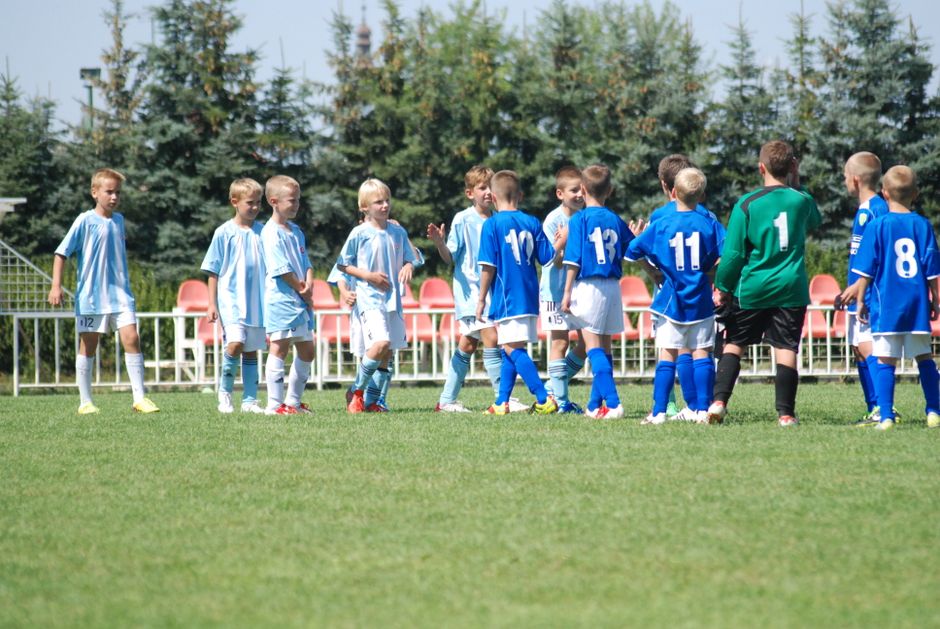
Somewhere under the spreadsheets and the insurance forms and the angry parent emails, there are kids playing a sport they love on a field you made available to them. That’s the whole point.
If your youth sports league is drowning in registration spreadsheets, dues tracking, and member communications, Somiti can help you manage it all in one place. Less time on admin, more time on the field.